
20 Yard RORO Skip Hire
The construction industry's everyday RORO: enough volume to keep a site moving, with sides still low enough for denser mixed waste.
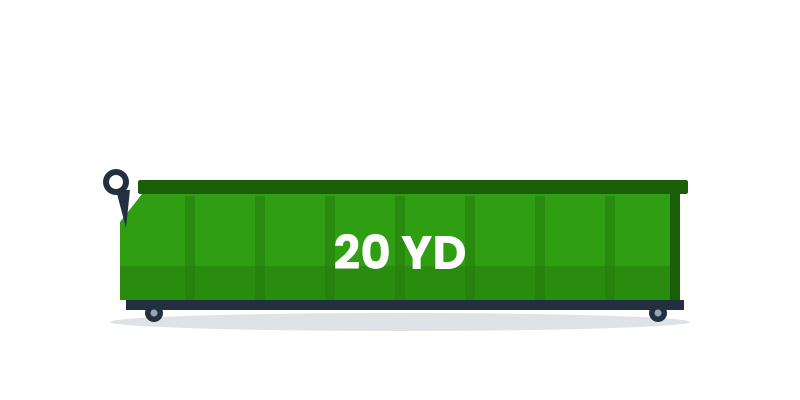
On building sites across Britain, the 20-yard container is the size most people picture when they hear the words roll-on roll-off. It holds a nominal 20 cubic yards, about 15.3 m³, and strikes a balance the other sizes do not: sides low enough for machine or hand loading and for denser mixed waste, yet enough room that a busy site is not calling for an exchange every other day.
It is also the smallest container in the range and the one with the lowest sides; above it, the 25-yard RORO begins the general-purpose band. We coordinate supply through licensed local partners and confirm what is available for your postcode.
A container for each phase of the build
Waste changes as a project moves on. During substructure and frame, it is offcuts of formwork timber, rebar ends, pallets and broken blocks. Envelope and roofing bring insulation, membrane and cladding trims. Fit-out produces the greatest volume: packaging from every delivery, plasterboard, flooring offcuts and joinery waste. External works finish the job with kerb and paving offcuts.
A 20-yard RORO handles all of these, which is why site managers keep one on hire throughout and add a 40-yard container for light packaging once fit-out begins. Our comparison of 20 and 40-yard RORO skips sets out when to run both.
Mixed loads versus segregated streams
Mixed construction waste goes to a facility where it is sorted mechanically and by hand. That works, but separating on site gives you better information for your waste records and can reduce disposal costs. The 20 is a convenient size for a dedicated timber container, a metal container or a plasterboard-only container alongside the mixed one.
Label each container clearly, keep the labels visible from the direction people approach, and brief subcontractors at induction, because a segregated load that arrives contaminated is treated as mixed. Our waste segregation service can help plan the layout.
How much heavy material is too much
There is no honest single answer, because it depends on the container supplied and the vehicle carrying it. The principle is constant: soil, concrete, brick and hardcore are dense, and a 20-yard container filled with them would put the lorry far over its legal weight limit. Where a load is mostly inert, the partner will set a fill line well below the top.
For bulk excavation and breaking-out work, look at tipper hire or grab lorries instead, and keep the RORO for the mixed fraction. If spoil may be contaminated, it needs testing and a contaminated soil route.
Positioning on a working site
Decide the container position before the first delivery and protect it in the traffic management plan. The hook-loader must be able to drive in, line up straight with the bay and roll the container off, then repeat the manoeuvre in reverse at each exchange. Ground should be hardstanding or well-compacted stone; soft formation will rut and may stop the lorry reaching the bay in wet weather.
Clearances vary by container and local partner and are confirmed with your quote. Keep the bay away from scaffold, overhead services and excavation edges, and do not let deliveries of materials block it.
Restrictions that apply on every site
A mixed 20-yard container is for non-hazardous waste. Asbestos, whether found in an existing building or dug up in made ground, must go through a licensed asbestos collection. Resin and paint tins that still hold liquid, mastic tubes in quantity, oils, fuels and gas cylinders are handled as hazardous waste under consignment notes, called special waste in Scotland.
Batteries from site tools, lighting tubes and redundant electrical plant also stay out. Mention anything of this sort when you request a quote and we will point you to the right specialist collection.
Commonly loaded into a 20-yard RORO
- Mixed construction and fit-out waste
- Formwork timber, pallets and joinery offcuts
- Rebar ends, steel offcuts and metal trims
- Insulation, membranes and cladding offcuts
- Packaging, strapping and plastic wrap
- A controlled share of brick, block and tile
- Plasterboard as a dedicated single-material load
Never in a mixed 20-yard load
- Asbestos or asbestos-contaminated soil
- Plasterboard mixed with general waste
- Liquid resins, paints, solvents and oils
- Gas cylinders and aerosols in bulk
- Batteries, lighting tubes and electrical equipment
- Tyres
- Clinical or sanitary waste from welfare units
Not sure? See our waste types guide or ask us when you book.
Ideal for
- Main contractors
- Housebuilders
- Fit-out contractors
- Civil engineering compounds
- Roofing and cladding trades
- Demolition soft strip
20 Yard RORO Skip Hire – your questions answered
Can’t see your question? Call 0333 121 1056 or send us a message.
Why is the 20-yard size so common on construction sites?
It is the one container whose sides are low enough to load comfortably and to suit denser mixed waste. That lets one container cope with most phases of a build, and it is widely stocked by local partners, which helps when regular exchanges are needed.
Can I have several 20-yard containers for different materials?
Yes, subject to space and local availability. A common arrangement is one mixed container with separate ones for timber, metal or plasterboard. Each needs its own clear approach for the hook-loader, so show us a site plan and we will help work out whether the layout is practical.
What paperwork comes with each collection?
Every non-hazardous load is covered by a waste transfer note recording what the waste is, who produced it and who carried it. Keep these with your site records. Our article on waste transfer notes explains what the document must contain and how long to retain it.
How quickly can a full 20-yard container be exchanged?
It depends on local availability and is confirmed when you book. Sites that fill containers on a predictable cycle are better served by a planned RORO skip exchange than by calling each time, because the partner can build the visits into their schedule.
Often booked with 20 Yard RORO Skip Hire
Need more than one service for the same project? Add them to one enquiry and we’ll coordinate them together.
Get a Quick Quote
Tell us the site postcode, the waste, the container size if you know it, and when you need it. Mention exchanges, other sites or specialist waste and we will include them. Photos of the waste and the access help.
ROROSkipHire.com is operated by Waste Cloud Ltd. Services are coordinated centrally and carried out by licensed local waste management and haulage partners across England, Scotland and Wales.